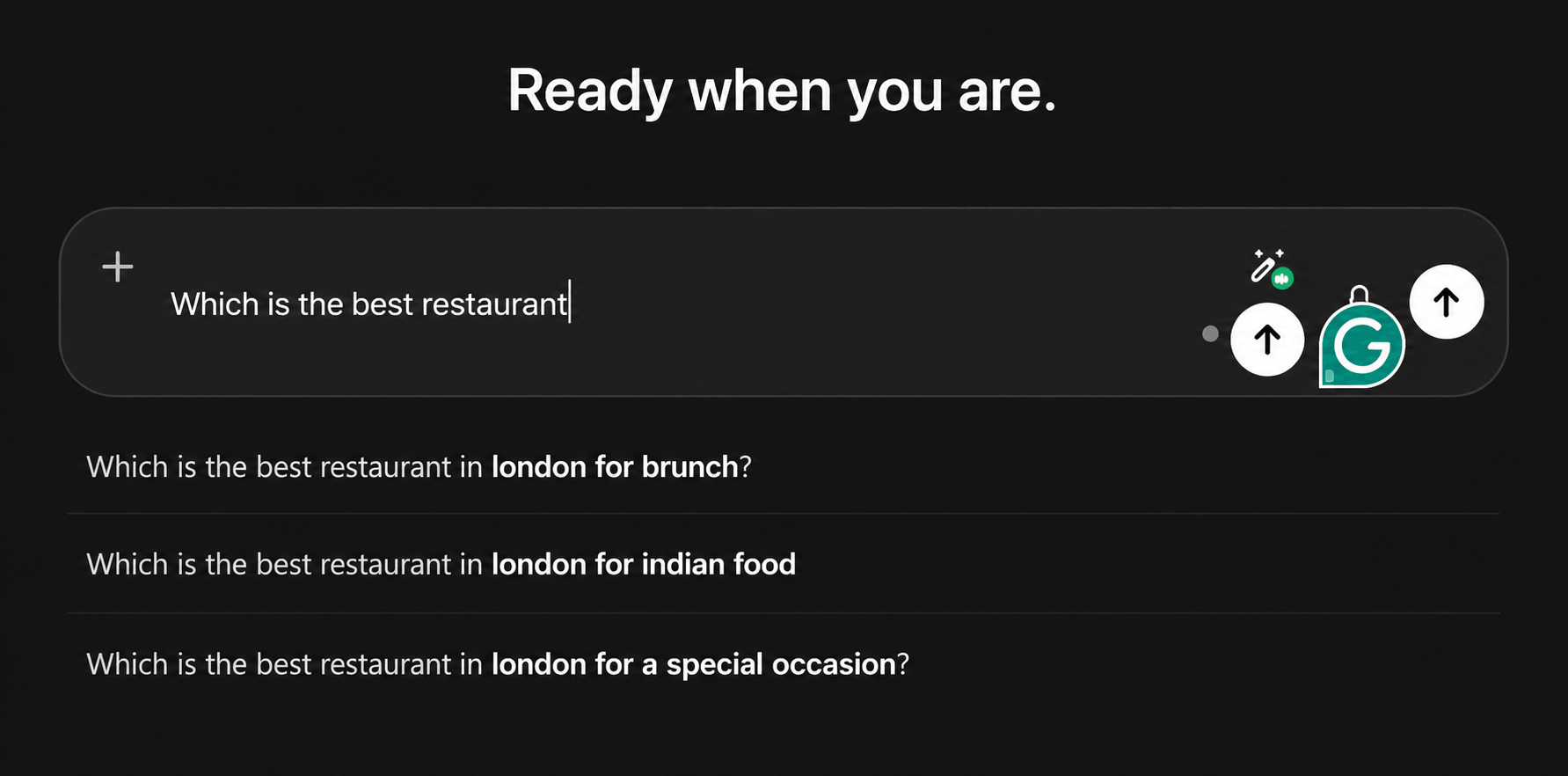
For a long time, we treated search engines like a giant stack of yellow pages. You must be used to typing in a word, and Google will hand you a list of websites for you to investigate yourself. The heavy lifting involves clicking on the subject, reading, and comparing the results.
Figure 1.1: A traditional “Google Search Engine Results Page (SERP)” showing organic listings and listicles for local business queries.
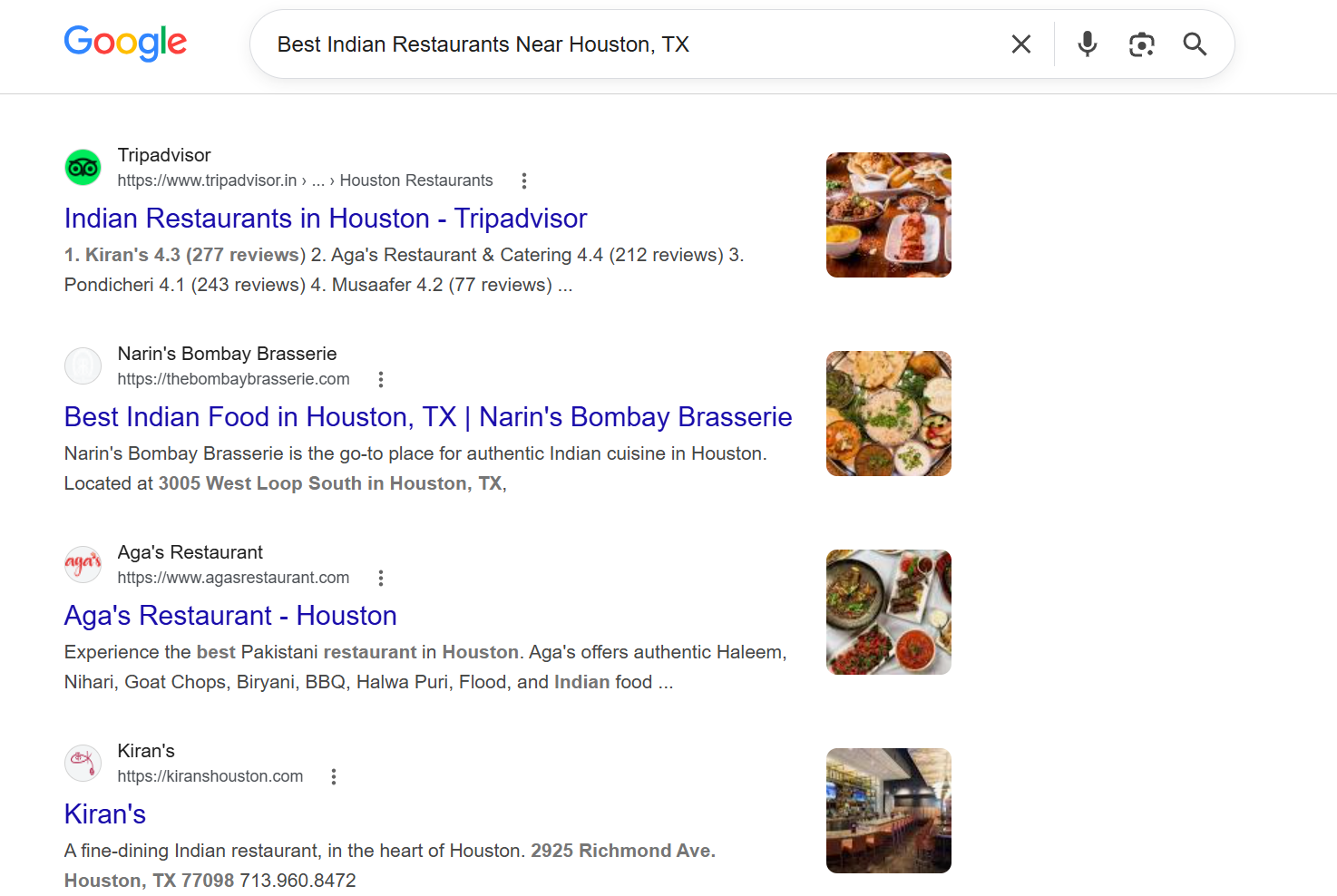
Source: Google Search
The End of the “Huge Comparison”
That model is officially hitting the history books. We are moving away from a world of “search and find” into a world of “ask and receive.” AI systems are no longer pointing to where the information lives. They are reading that information for you and summarizing it in real-time.
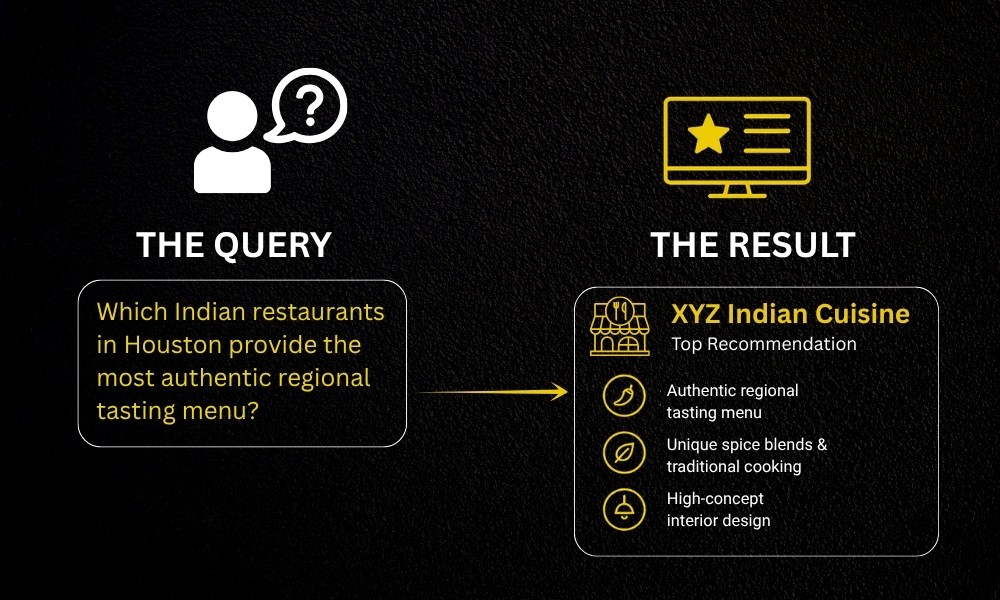
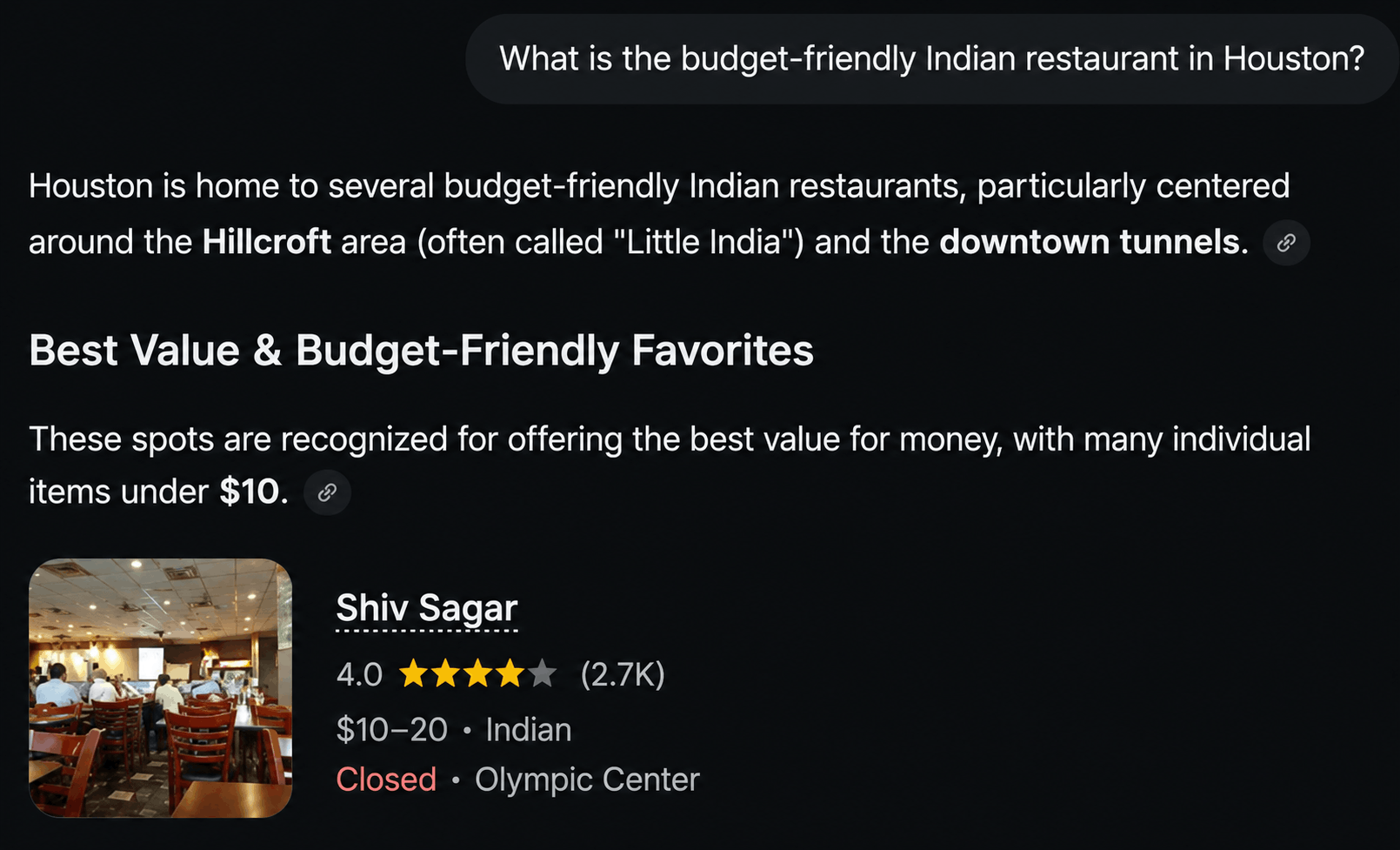
Figure 1.2: An example of how modern search engines prioritize summarized insights and high-intent local data. For a business, appearing in this “top-rated & highly recommended” section is now the best way to gain visibility.
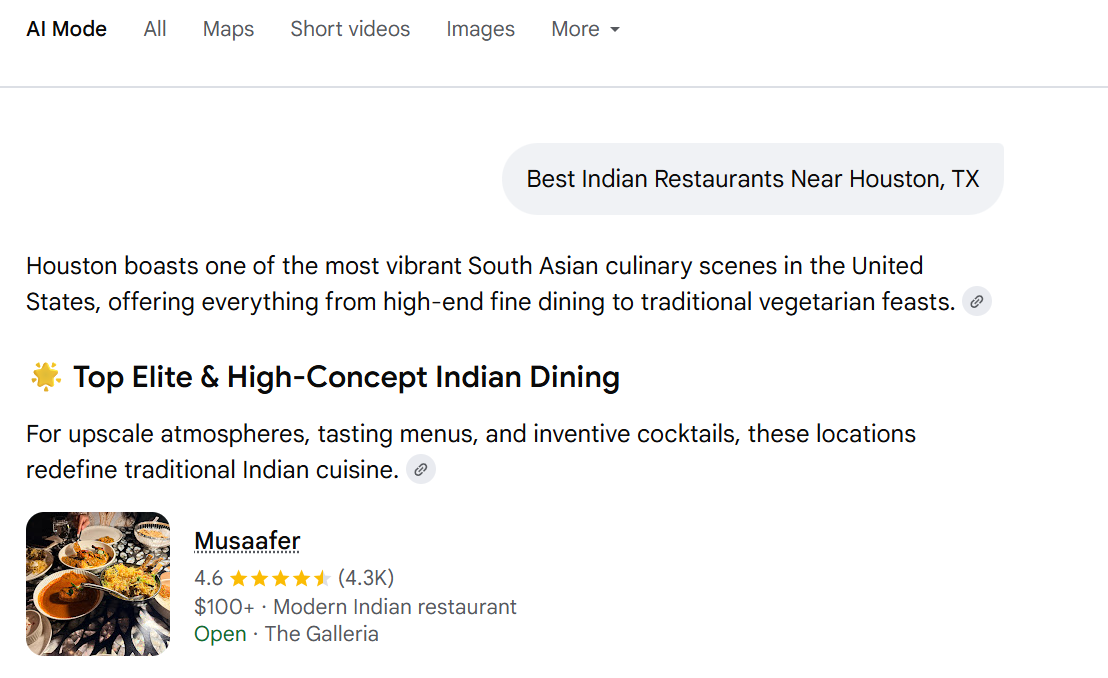
Source: Google AI Search Mode
How AI Search Feels Different (Traditional Search vs. AI Search)
Traditional search was all about matching keywords. If you typed “best Indian restaurant near Houston,” Google looked for only those specific words. Whereas AI Search is something because it clearly understands intent.
When a user asks a question today, the AI isn’t just looking for a word match like traditional search does. It’s looking at the nuances of the request. It interprets when you are actually trying to solve it. It pulls facts from a dozen different high-quality sources and gives a custom answer right there on the screen.
Users are getting the complete picture before they even consider clicking a “blue link.”
Why Everyone Is Making the Switch “Dominant”
In the US, we value efficiency. We want the quick answer, not three clicks from now. AI Search is becoming the dominant way people find information because it removes the “friction” of the internet.
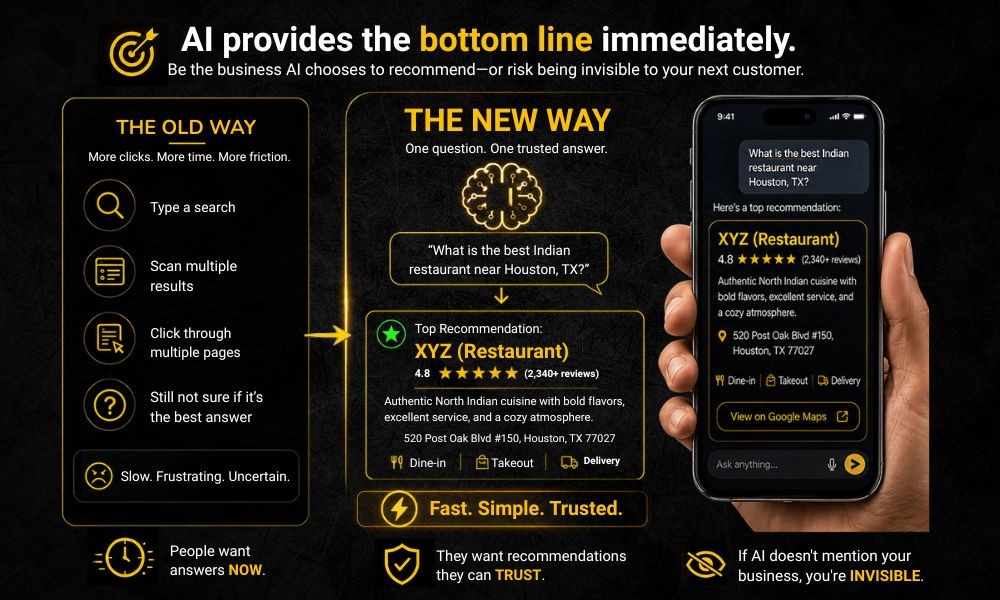
Whether it’s someone asking their phone for a quick fix for a leaky sink or a business owner looking for a marketing consultant, they want a direct recommendation they can trust. AI provides that “bottom line” immediately. If that summary doesn’t mention your business, you are effectively invisible to that customer.
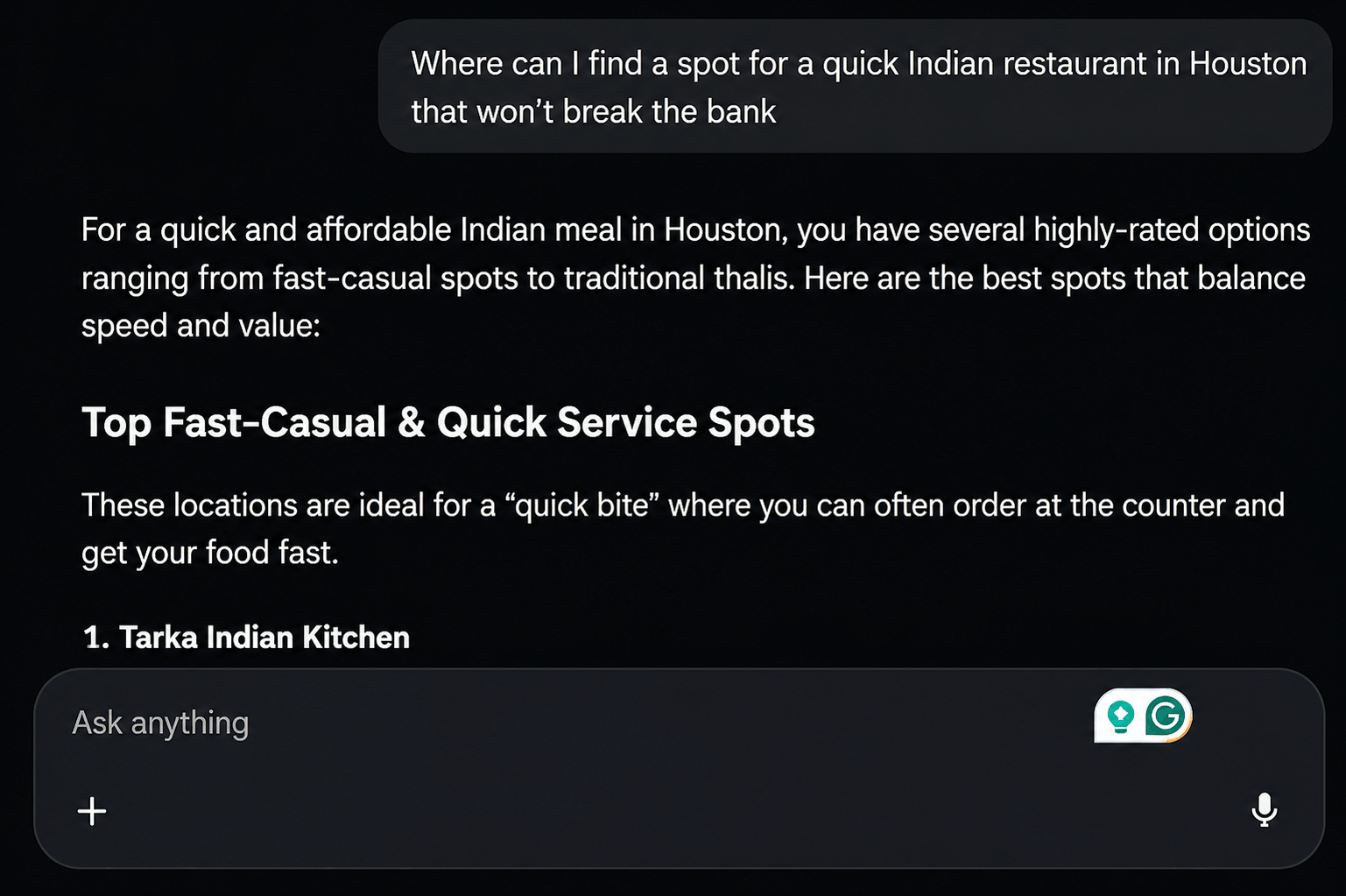
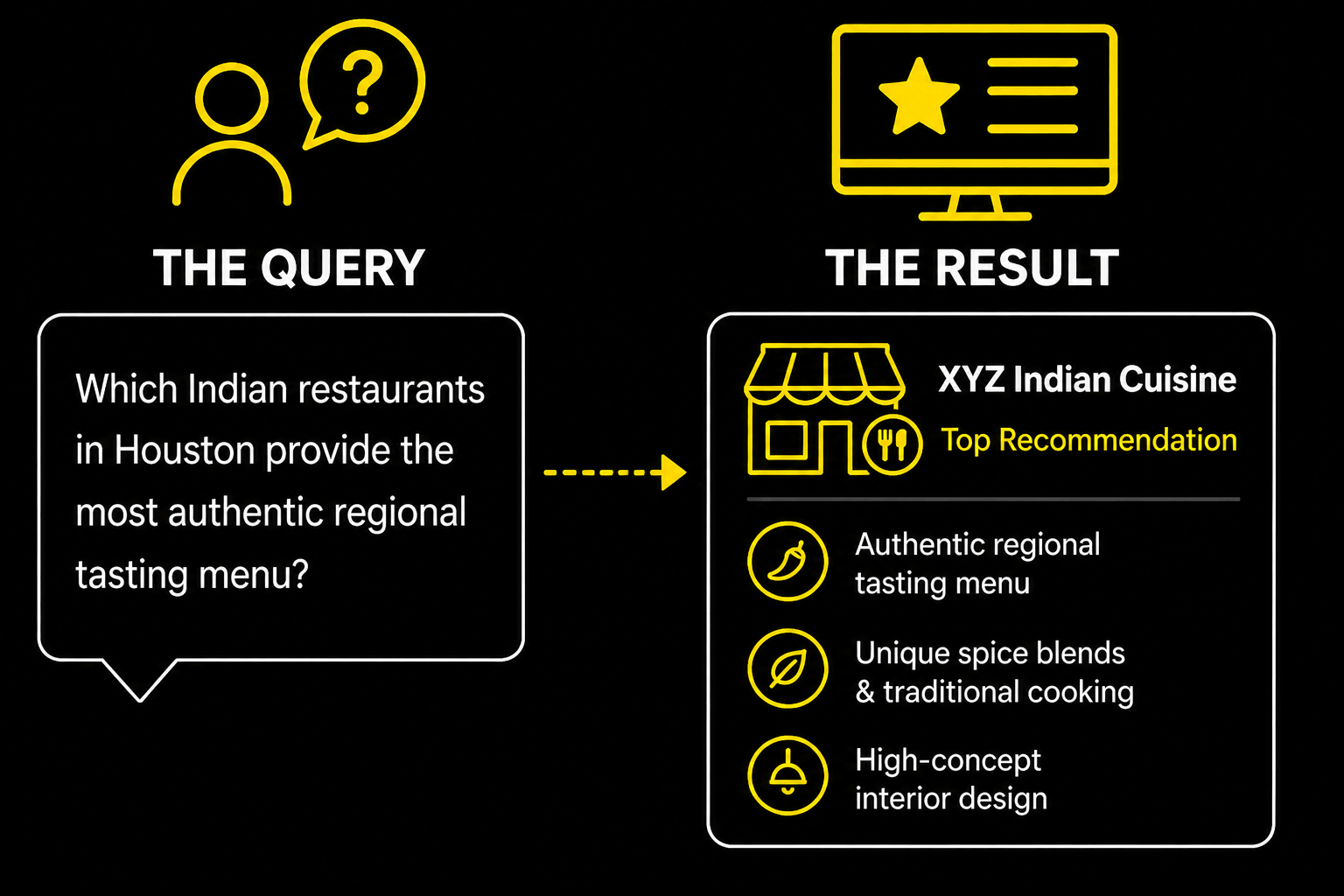
Figure 1.3: This comparison highlights the friction of the “old way” scanning and clicking versus the efficiency of the “new way,” where AI provides a single, trusted answer instantly. In this new landscape, visibility is binary: you are either the top recommendation or you are invisible.
Source: Generated via ChatGPT
The Shift From Search Engines to Answer Engines
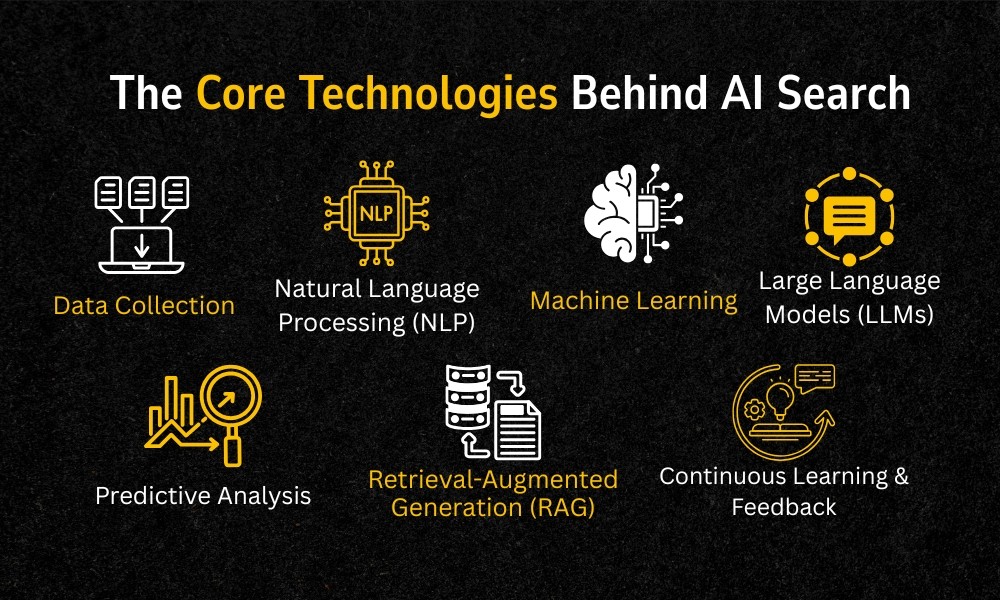
We are witnessing a massive shift in how the internet is organized. We are moving from search engines to “answer engines.” This means the old trick of just “ranking number one” isn’t the ultimate goal anymore.
To win in this new landscape, you have to be more than just a website. You have to be an authority. You need to provide clear, helpful, and honest information that proves you actually know your stuff. When you share real stories from your years in the field or provide clear-cut advice that actually works, the AI notices.
It sees that you aren’t just a robot-written site but a trustworthy expert. This is how you become the “source of truth” that the AI recommends to every user who asks.